In the Community
Citizen science starts with the people who are in the sea every day. We meet them on the beach, in clubs and in community halls.
What this means
The lab's community work rests on a simple idea: people who are regularly in the sea see things a research team is not always there to see. Rather than relying on research cruises alone, we invite surfers, swimmers, divers, lifeguards and beachgoers to act as additional eyes along the coast and report what they encounter.
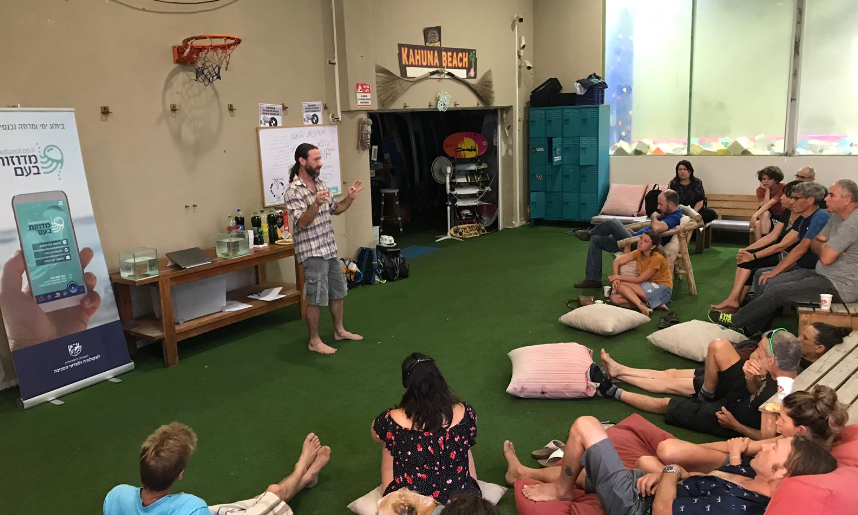
These meetings run in both directions. We bring an explanation of jellyfish biology, of why blooms form and of how a sting is best treated, and we receive local knowledge, reports and questions that help steer the research. The result is a continuous national dataset over time, alongside a community that feels a sense of belonging and responsibility towards its own sea.
All reports are collected through the Meduzot Ba'am project. (opens in a new tab)
How we work in the community
Beach communities
Surf clubs, swimmers, divers and lifeguards spend more time in the water than any research team can. Meeting them where they already gather turns everyday sea time into observation time.
Reporting with the app
Through the Meduzot Ba'am app, anyone can report a jellyfish sighting from the beach. Each report adds a point in time and space to a national picture of jellyfish along the Israeli coast.
Talks and open meetings
Informal evening talks with community groups explain what jellyfish are, why blooms occur and what a good report looks like, followed by open questions.
Guided beach sessions
On the shoreline itself we show what to look for, how to identify common species and how to stay safe around them.
Want to host a session?
Beach clubs, volunteer organizations, local authorities and resident groups are welcome to contact us to arrange a talk or a guided beach session. Please write to us individually with your group's details and location.