Plankton

Plankton sampling, quantitative microscopy and automated imaging during marine research cruises.

Research cruises

During research cruises, we collect plankton samples, perform quantitative counts, and analyze the resulting data. Plankton abundance is assessed using both manual counting under a binocular microscope and an automated imaging device, the PlanktoScope.

Data generated by the PlanktoScope are subsequently uploaded to the EcoTaxa platform for classification and further analysis.

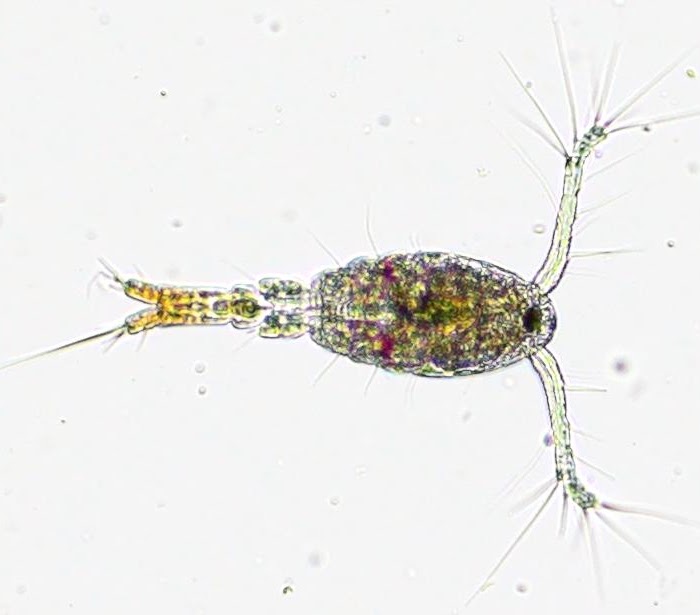
Microscope image of a marine copepod plankton specimen

From the sea to the microscope

As part of our research cruises, we collect plankton using plankton nets and conduct detailed taxonomic identification in the laboratory. Identification is carried out using binocular microscopes and a PlanktoScope, a digital microscope equipped with a flow-through imaging system that enables high-resolution documentation and analysis of plankton communities.

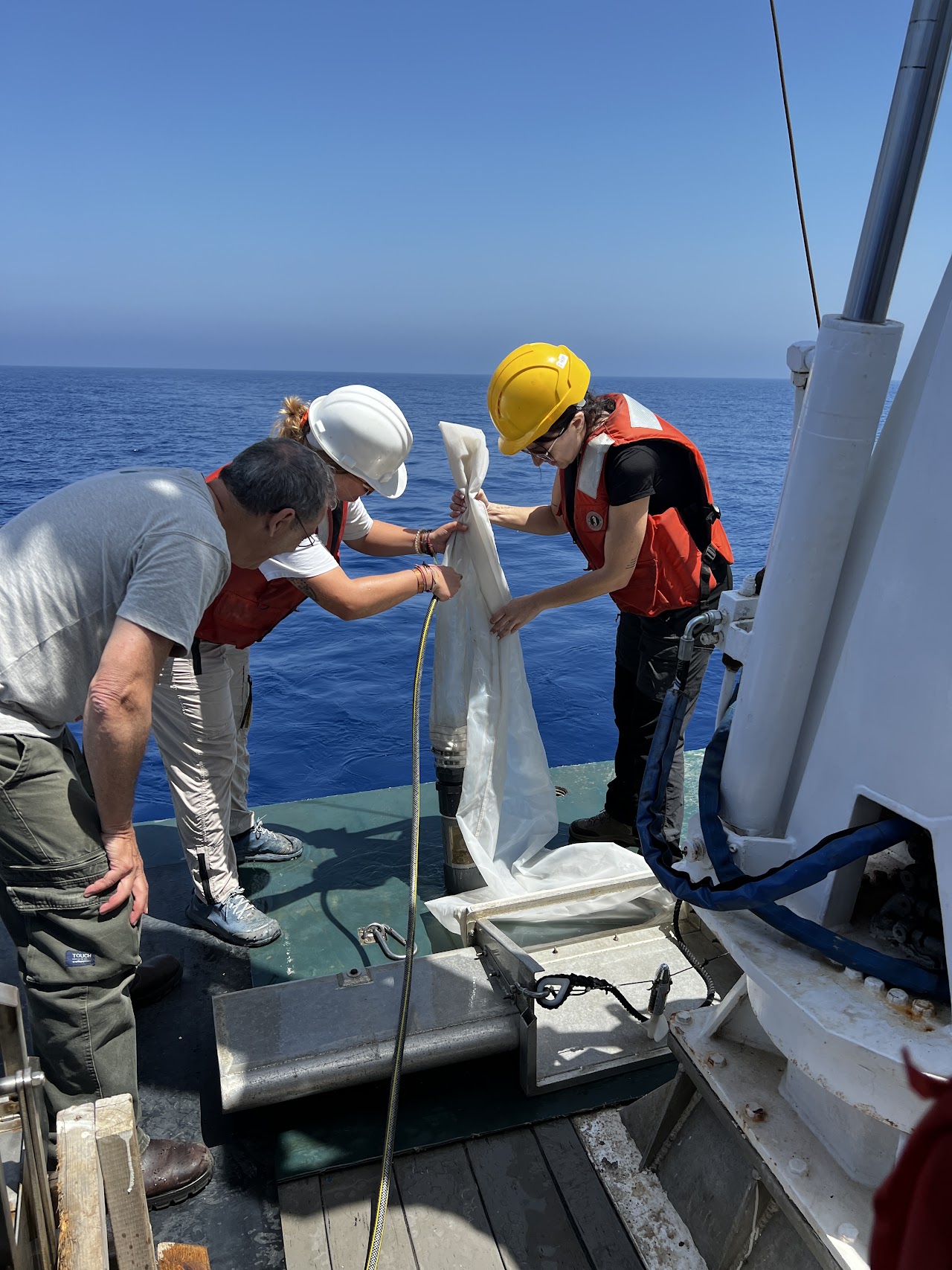
Three researchers in life vests and hard hats handling a white plankton net on the deck of a research vessel
Plankton net on deckRecovering the plankton net after a tow during a Mediterranean research cruise.
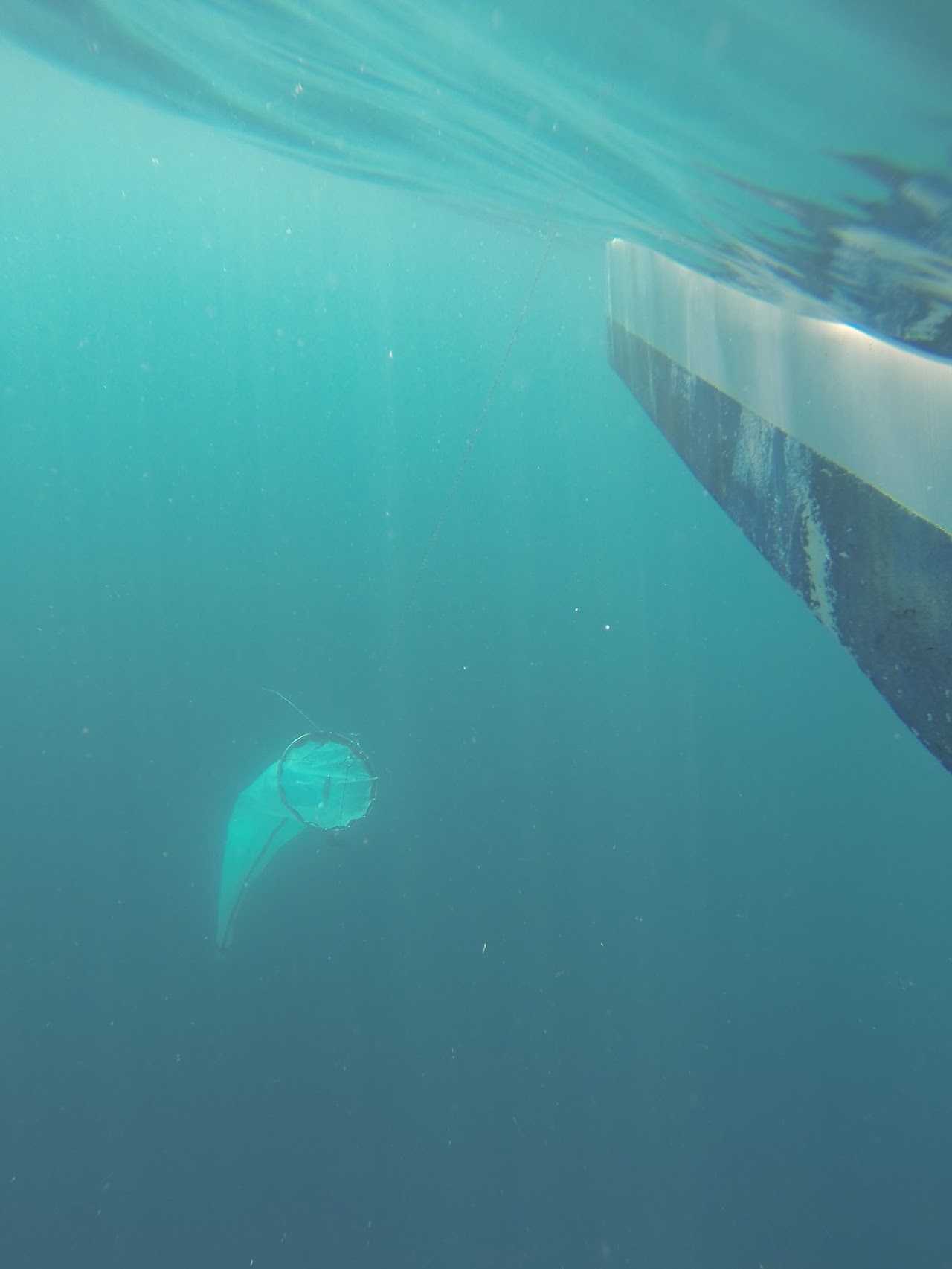
Underwater view of a plankton net towed on a line beside the hull of a vessel in turquoise water
Towing beneath the surfaceThe net drifting alongside the hull, filtering the upper water column as the ship moves slowly forward.
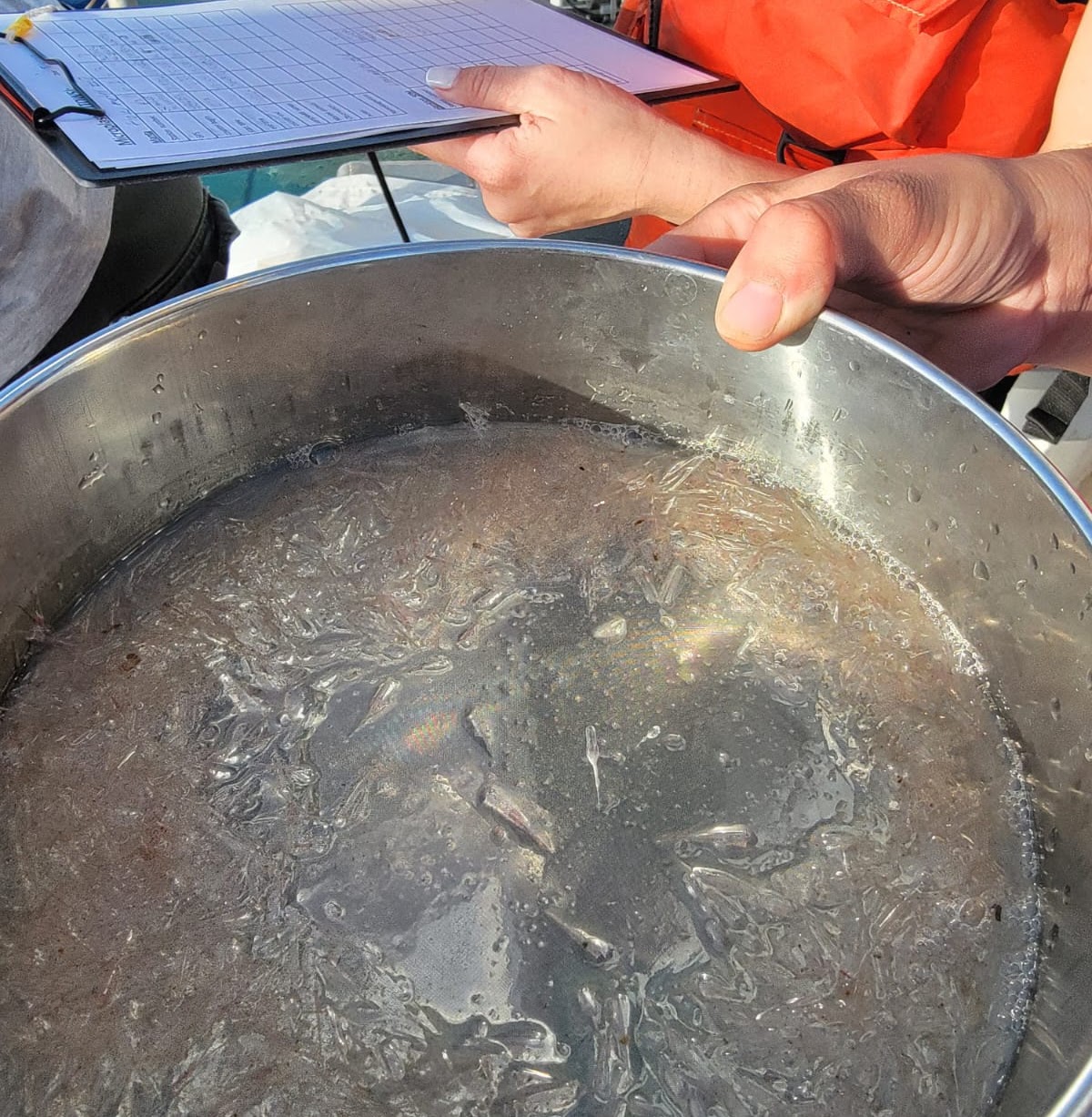
Stainless tray of seawater holding transparent arrow worms, held beside a field data sheet on a clipboard
Chaetognatha in the sample trayA fresh tow examined on board: transparent arrow worms (Chaetognatha), voracious predators of the zooplankton.
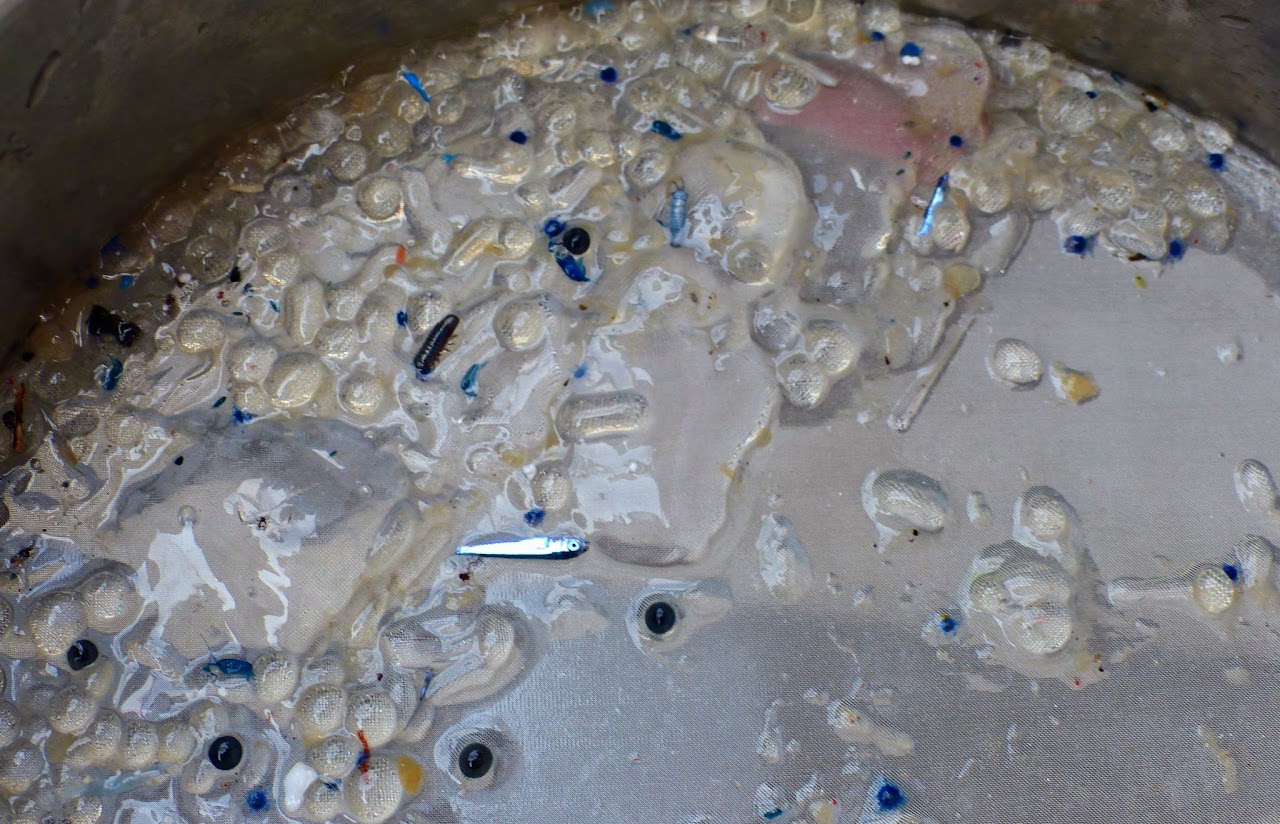
Close-up of many barrel-shaped salps, a striped amphipod and a small silver fish larva in a sampling tray
Salps, amphipods and fish larvaeA dense gelatinous catch: salps with their dark guts, an amphipod and a silvery fish larva among the barrels.
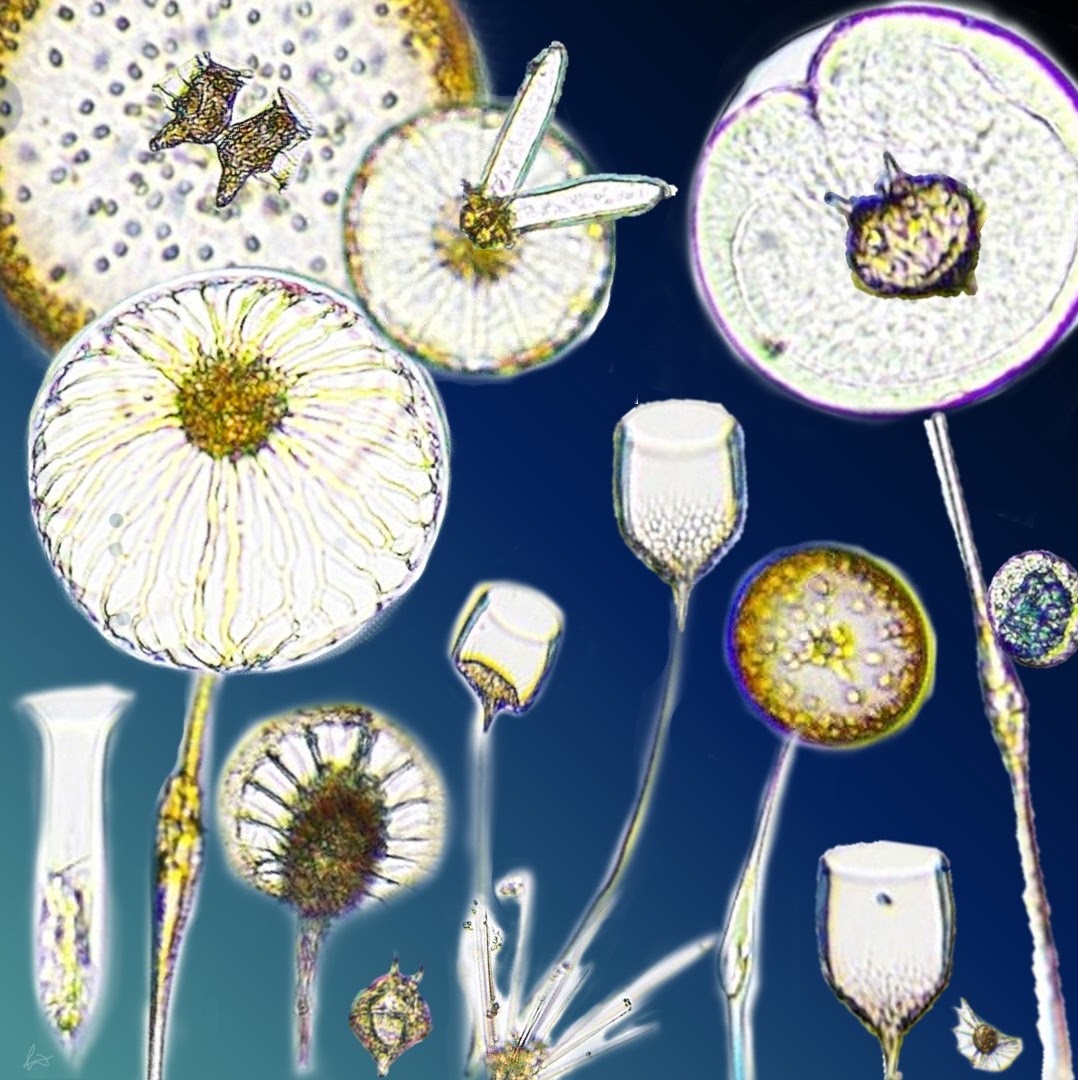
Microscopy composite of diatoms, dinoflagellates and vase-shaped tintinnids on a blue background
Under the microscopeDiatoms, dinoflagellates and tintinnids imaged during taxonomic identification in the laboratory.

Working on board with the PlanktoScope

A fresh sample runs through the PlanktoScope flow cell while the ship is at sea, and each particle is imaged in turn for later analysis. The clip loops silently; use the controls to unmute or pause.

Research poster

Poster presented at the Israeli Society for Ecology and Environmental Sciences meeting, 2025. Read the summary, view the full poster or download the PDF.

Conference poster

PlanktoScope: see the world of plankton at sea

Carmel Danino Gozlan, Dror L. Angel

Plankton underpins marine food webs, drives biogeochemical cycles and fixes 30 to 50 percent of the world's carbon dioxide. Shifts in community composition act as an indicator of ecological change and of human pressure on the sea.

The poster walks through the PlanktoScope workflow: a net tow at sea, filtering the sample, running 6 ml through the flow cell, automated imaging and classification in EcoTaxa. Samples from four stations were processed on board the Mediterranean Explorer, and the platform was also used on microplastic fibres and on pollen from an archaeological excavation.

  • Portable 35 x 30 x 15.5 cm digital microscope, 3.5 kg, for ship and lab
  • Quantitative flow-cell imaging of particles between 20 and 300 microns
  • Live phytoplankton and zooplankton imaged at sea, before colour and shape are lost to preservation
  • Images classified and shared through the EcoTaxa platform following FAIR data principles
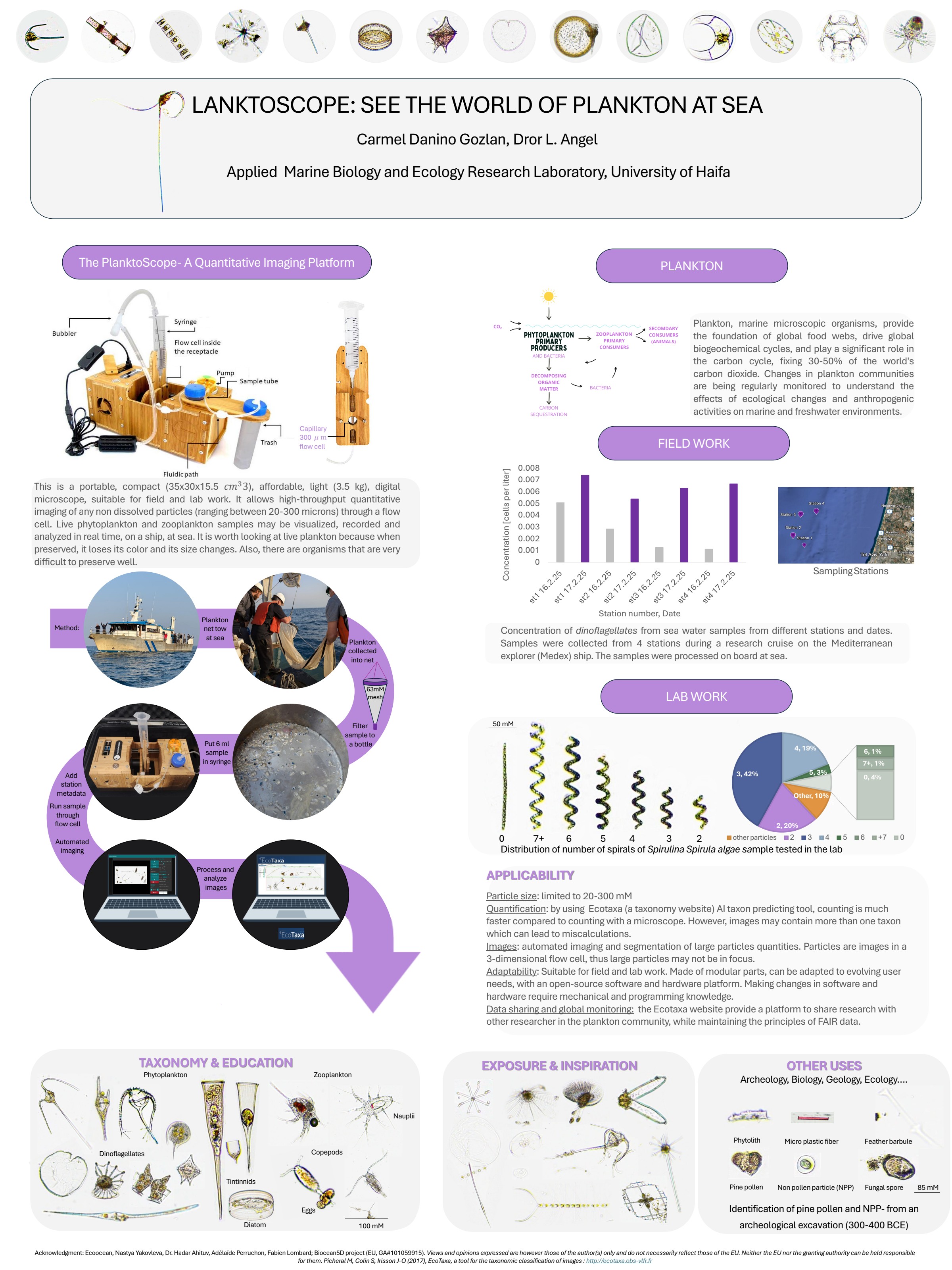
Research poster about the PlanktoScope with diagrams, charts and plankton photographs
Poster preview. Selecting it opens the full PDF in a new tab.

Focus areas

  • Research cruise sampling
  • Quantitative plankton counts
  • Binocular microscopy
  • Automated PlanktoScope imaging
  • EcoTaxa classification and analysis