

AMBER Research Group

Interdisciplinary research on the natural and human dimensions of marine ecosystems, at the University of Haifa.

About the group

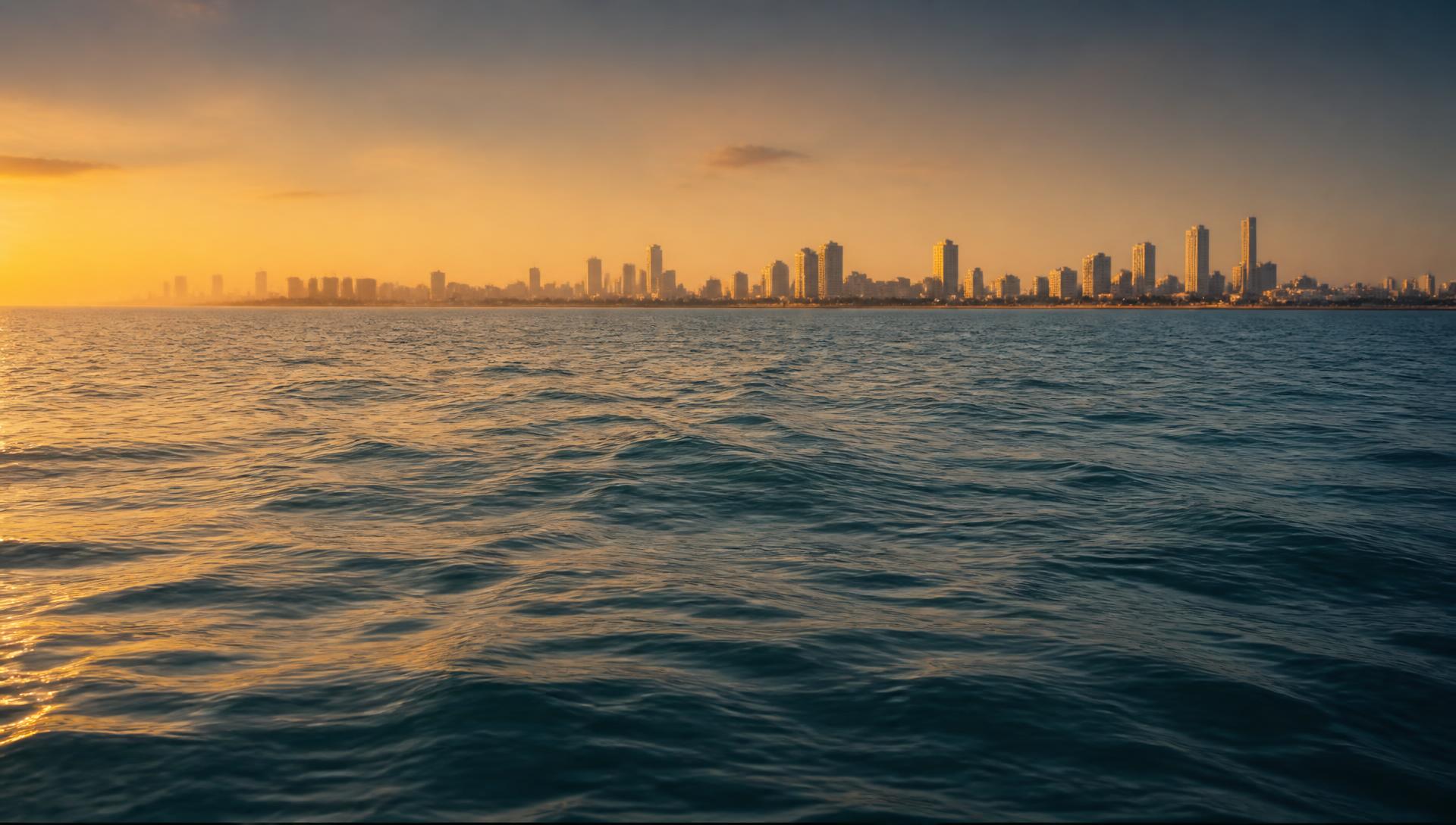
View from the sea toward the coastline and the Tel Aviv skyline at golden hour

The AMBER lab focuses on interdisciplinary research on natural and human dimensions of marine ecosystems. The group has participated in national and international research projects and consortia. The AMBER group is also heavily involved in citizen science and science communication, and students and staff interact with the public and schools on an ongoing basis.

Lab members are frequently approached by national and international radio, television and other forms of media with respect to such topics as jellyfish, finfish, aquaculture and marine pollution.

Principal investigators and lab management

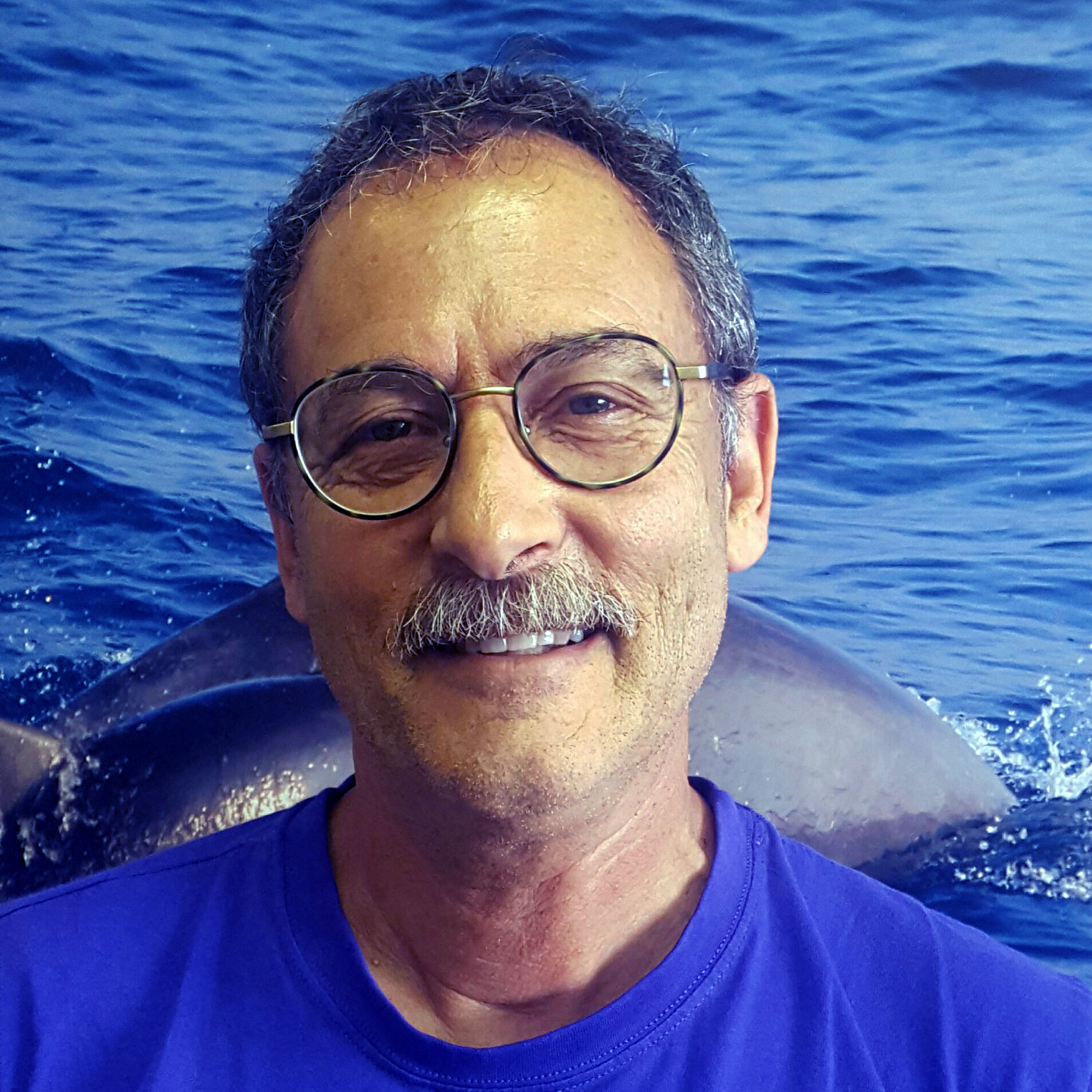
Portrait of Professor Dror Angel in front of the sea

Professor Dror Angel

Head of the AMBER Lab

Focus: Marine Ecology, Gelatinous Zooplankton, Microplastics, Mariculture

drorleonard@gmail.com

Professor Dror Angel is a marine ecologist with considerable experience in plankton and benthic studies, focusing mainly on invertebrates and on marine microbes. He has a passion for gelatinous zooplankton and an interest in what enables many of these taxa to form blooms.

He studies microplastics in aquatic systems and means to reduce plastic pollution of the sea. He also studies environmental interactions with, and sustainable aspects of, mariculture.
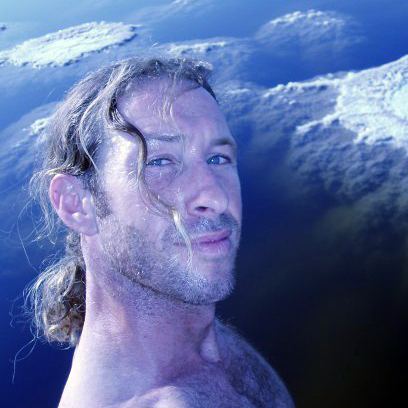
Portrait of Dr. Dor Edelist in the water

Dr. Dor Edelist

Co-Principal Investigator

Focus: Marine Ecology, Fisheries, Jellyfish

blackreefs@gmail.com

I am a marine macro ecologist seeking to improve the flow of information from the sea to the screen. My research tackles some of the most challenging fields in human-ocean interactions: fisheries and invasive species (PhD) are at the core of my research.

I also have ongoing research interests in jellyfish (hobby/obsession), marine ecosystem services (post doc), development of technologies for submarine infrastructure risk assessment and marine spatial planning (consulting). I have a solid publication record with more than 30 peer reviewed publications, considerable experience leading research projects and excellent written and verbal communication skills.

Portrait of Dr. Shirra Freeman

Dr. Shirra Freeman

Co-Principal Investigator

Focus: Environmental Economics

shirra.freeman@gmail.com

Shirra's research spans economics, decision science, and risk assessment related to environmental health. She has worked in the areas of sustainable aquaculture, plastic pollution and chemical exposures and is especially interested in evidence-based policy and decision making.

Shirra Freeman leads the socio-economic research on the Israeli coastal protection case study in the TRANSEATION project. She is an economist specializing in environmental and environmental health economics and has worked extensively on issues related to marine and coastal ecosystems and their interaction with economic activities and human wellbeing. She is a faculty member of the University of Haifa's School of Public Health.

Portrait of Carmel Danino Gozlan

Carmel Danino Gozlan

AMBER Lab Manager

Focus: Field and laboratory operations, project management

cdanino@staff.haifa.ac.il

Carmel is a researcher in the Laboratory of Applied Marine Biology and Ecology. She holds an undergraduate degree in biotechnology and food engineering, and has worked in a number of managerial roles. Carmel is responsible for overseeing the execution of projects, both in the field and in the lab, and for addressing the logistical challenges in our research.

Over the years Carmel has taken part in projects of jellyfish research, citizen science, monitoring and assessment of the ecological effects of artificial reefs, carbon sequestration, and field work at sea including collecting and identifying microplastics and plankton.

PhD Students

Portrait of Nastya Iakovleva by the sea

Nastya Iakovleva

Focus: Jellyfish

ctenophorana@gmail.com

I obtained my first degree at Kazan Federal University (Russia), where I studied the effects of dioxin intoxication on brain cells. Subsequently, I earned my master's degree at Lomonosov Moscow State University (Russia), studying the epithelial tissue of ctenophores.

My current PhD research project, conducted at the Israel Oceanographic and Limnological Research, is dedicated to examining gelatinous zooplankton — specifically jellyfish and ctenophores — and the factors that affect their populations. I am especially interested in studying gelatinous zooplankton as hosts for other parasitic invertebrates. For my research I use a range of techniques including DNA barcoding, light and scanning electron microscopy, and underwater imaging. I am convinced of the importance of studying jellyfish populations near the shores of Israel: these fascinating creatures have a profound impact on various aspects of the environment and human activities.

Portrait of Haitham Ezzy outdoors

Haitham Ezzy

Focus: Remote Sensing

human.h89@gmail.com

Driven by my passion for marine ecology and advanced technology, I am a dedicated PhD student specializing in remote sensing and its application in understanding fish distribution and behavior. My research focuses on leveraging innovative techniques such as LiDAR, photogrammetry, and artificial intelligence to bridge the gap between underwater ecosystems and cutting-edge technology.

Through this interdisciplinary approach, I am uncovering insights into the intricate relationships between fish habitats and their behavior, contributing to the conservation and sustainable management of our marine environments. I am a student in the School of Environmental Sciences, supervised by Professor Anna Brook, Head of the Spectroscopy and Remote Sensing Laboratory, and Professor Dror Angel, Head of the Applied Marine Biology and Ecology Laboratory at the Department of Maritime Civilizations.

Portrait of Tom Avikasis Cohen

Tom Avikasis Cohen

Focus: Oil Pollution

tomchu7@gmail.com

Our study deals with oil detection as an anomaly in the environment through the use of remote sensing and data from a variety of satellites, combined with methods of machine learning. Using this approach, the oil is viewed as pollution compared to a known baseline of water parameters, instead of identifying the oil itself.

One of our goals is to create a designated application for this purpose, allowing users from around the world to detect and monitor oil spills. We hope this study will result in tools that assist in early treatment of the risk factor, and therefore contribute to preventing future damage to the ecosystem and the environment due to oil spills. I am a student in the School of Environmental Sciences, supervised by Professor Anna Brook, Head of the Spectroscopy and Remote Sensing Laboratory, and Professor Dror Angel, Head of the Applied Marine Biology and Ecology Laboratory at the Department of Maritime Civilizations.

MA Students

Portrait of Ephraim Conway in diving gear

Ephraim Conway

Focus: Micro-plastics

ephraim.conway@gmail.com

Ephraim has a BA in Political Science (2004) from the University of Wisconsin and finished his coursework for an MA in Maritime Civilizations (Underwater and Coastal Archaeology) at the University of Haifa in 2025. Currently, Ephraim is conducting research on microplastics associated with coastal macroalgae in the Eastern Mediterranean Sea.

Portrait of Haim Lahovitski

Haim Lahovitski

Focus: Carbon Sequestration

haim3300@gmail.com

Haim graduated with a bachelor's degree in marine biology from Ruppin College (Michmoret campus) in Israel. He is now pursuing an MA in the Department of Archaeology and Maritime Civilizations, and is dedicating his thesis to testing the rate of decomposition of organic matter in aquatic anoxic conditions.

Collaborators

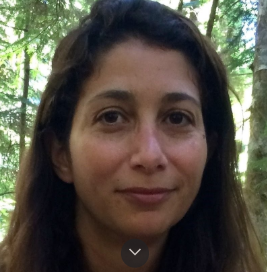
Portrait of Hila Dror

Hila Dror

Focus: Jellyfish

hila.dror@gmail.com

Hila studies the biology and ecology of the scyphomedusa Rhopilema nomadica with an emphasis on the early development stages (abiotic conditions aiding proliferation and prey-predator relationships). She was also a member of the GoJelly project team, which looks into practical methods of exploiting harmful jellyfish blooms — our team studies the use of jellyfish mucus to capture microplastics in waste-water treatment plants to prevent them from entering the marine environment. She has an M.Sc. in Zoology in the Ecology and Environmental Studies track from Tel Aviv University.

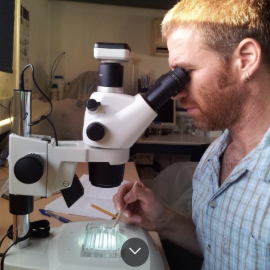
Zafrir Kuplik working at a microscope

Zafrir Kuplik

Focus: Jellyfish

kuplik3@gmail.com

Zafrir has been studying scyphozoans for the past 12 years, specializing in the ecology of the medusa Rhopilema nomadica in the Mediterranean coastal waters of Israel. His main interests are the drivers of jellyfish blooms, mainly the cryptic stages of their life cycle.

Zafrir received his PhD from the Department of Maritime Civilizations at the University of Haifa and returned from a postdoc fellowship in Cape Town, South Africa. These days Zafrir is a researcher and the manager of the Coelenterates collection at the Steinhardt Museum of Natural History, Tel Aviv.

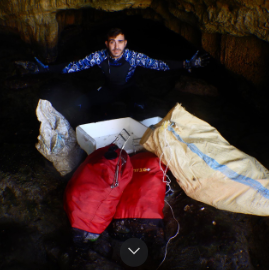
Ioannis Savva conducting fieldwork in a sea cave

Ioannis Savva

Focus: Marine Ecology, Marine Debris

ioannis.savva90@gmail.com

Coming from the fields of biology, ecology and marine biodiversity, Ioannis clearly sees how our planet is threatened by a multitude of anthropogenic pressures. Recognizing the great need for marine nature preservation, conservation and restoration, Ioannis set out to unravel the true depth of the marine litter issue in Cyprus as part of his doctoral studies at the University of Haifa. Specifically, he looks at the densities, spatio-temporal distribution, accumulation zones, sources and pathways of marine plastic debris (macro and micro) in various marine habitats, including coastal fronts, the seafloor, surface waters and semi-submerged sea caves.

Previous students